

Ahoy, fellow maritime enthusiasts and eco-conscious sailors! It’s your captain of innovation, Charlie de Carbon, back on deck, ready to explore a topic that unites the skies and the seas. Today, we’ll embark on a journey that begins with the fascinating world of aviation turbulence and then sets its course for the potential applications of this technology in the maritime domain. But first, let’s extend a nod of appreciation to the source that initiated this enlightening discussion, The Times. Their report on aviation turbulence has ignited our imagination about its relevance in our beloved maritime world.
Now, to the skies! Recent reports from the University of Reading and the Met Office have disclosed a noteworthy trend – bumpy flights are on the rise, courtesy of the warmer air brought about by climate change. This phenomenon has a direct parallel in the maritime realm, which faces its unique set of turbulence challenges. Here’s where the plot thickens.
The inspiration for our maritime journey stems from a bright mind named Andras Galffy, the founder of Austria-based Turbulence Solutions. His lofty mission? To “end turbulence for good.” The exciting twist is that his Turbulence Cancelling technology, initially designed for aviation, holds potential implications for our maritime world.
But, you might be pondering, what distinguishes this aviation-inspired technology from the well-known maritime application of trim tabs, particularly in high-speed, planing-type vessels? Trim tabs, like the graceful ballet dancers of the boating world, adjust a vessel’s posture to counteract turbulent forces, mainly in high-speed craft. However, Turbulence Cancelling technology takes a different approach. It’s not about fine-tuning the vessel’s posture; it’s about creating counterforces to mitigate turbulence’s impact on the ship.
The intriguing part is how this technology anticipates turbulence, much like a fortune teller for the sea. It relies on a system of sensors to detect incoming turbulence and adjust the trim of the ship’s hull accordingly, akin to fine-tuning an airplane’s wings. The objective is to help ships navigate choppy waters with minimal resistance, thereby reducing fuel consumption and emissions.
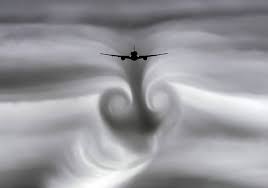
Moreover, there’s the matter of wake turbulence – the turbulent aftermath left behind by a ship. This is where we see the parallels with Turbulence Cancelling technology in aviation. Much as it cancels out turbulence in the air, a maritime adaptation, which we’ll dub “Turbulence Cancellation for Ships,” could detect incoming turbulence in the wake and create opposing forces to neutralize it.
In essence, it operates like noise-cancelling headphones. These headphones sense incoming noise and produce an opposing sound wave to cancel it out. Our maritime “Turbulence Cancellation for Ships” could similarly sense incoming turbulence and create opposing forces to subdue the turbulent wake.
In this era of sailing toward cleaner, more efficient, and sustainable maritime transport, this technology might offer us a key to reducing emissions and making ship journeys smoother, less turbulent, and less environmentally impactful. The cross-pollination of ideas from aviation to maritime transport represents a significant step toward a more sustainable and comfortable maritime future.
So, fellow seafarers, please accept my gratitude for accompanying me on this voyage of exploration. Keep a keen eye on the horizon, for the intersection of technology and the open sea promises a journey toward a cleaner, more efficient, and more serene maritime world. Until next time, fair winds, calm waters, and smooth sailing to you all! 🌊⚓🚢
Source: The Times – The Plane Tech That Could Make Turbulence a Thing of the Past
 Charlie de Carbon
Leave a comment