
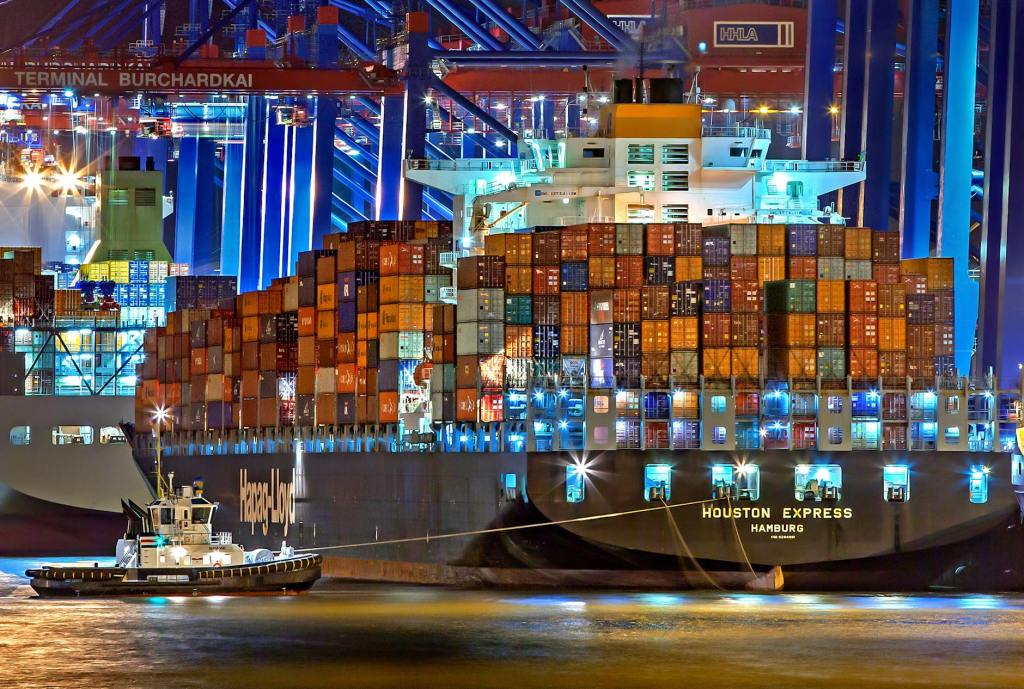
The maritime industry continues to face headwinds in its quest for decarbonization. Transitioning to net zero requires substantial capital investment, yet banks, crucial players in this financial landscape, face significant challenges in financing this green transition. Understanding these hurdles is vital for developing effective strategies to overcome them and drive sustainable change.
“The maritime industry is inherently risky.”
Decarbonizing the maritime sector is a capital intensive endeavor requiring significant investments in new technologies, retrofitting existing fleets, and developing infrastructure for alternative fuels. These projects often come with long payback periods, posing a daunting prospect for banks. Moreover, the maritime industry is inherently risky due to fuel price volatility, global trade fluctuations, and evolving regulatory landscapes. Banks need to evaluate the creditworthiness of shipping companies, many of which may have weakened balance sheets, especially in the post-pandemic economic environment.
“The regulatory framework for maritime decarbonization is still evolving.”
The regulatory framework for maritime decarbonization is still evolving, with varying standards and timelines from international bodies like the International Maritime Organization (IMO) and regional entities such as the European Union. This regulatory uncertainty complicates banks’ assessments of long-term investment viability. Banks are hesitant to commit large sums without clear, consistent, and long-term policy frameworks. Frequent policy shifts increase perceived risks, making substantial investments less attractive.
“Emerging technologies carry inherent risks.”
Many decarbonization technologies, such as hydrogen and ammonia-fueled ships, are still in developmental or early deployment stages. The lack of mature, proven technologies increases the risk of investing in projects that may not be commercially viable soon. In addition, supporting infrastructure for alternative fuels, such as refueling stations and supply chains, is not yet fully developed. Banks may be cautious about financing projects dependent on future infrastructure availability.
“Alternative fuels often come with higher costs.”
Alternative fuels and technologies often carry higher costs compared to traditional options. These increased operational costs can impact the profitability of shipping companies, raising concerns about their ability to service debt. The global shipping market is highly competitive and subject to economic cycles. Economic downturns or shifts in global trade patterns can impact demand for shipping services, affecting the financial stability of shipping companies.
“Assessing ESG impacts is complex.”
While banks are increasingly incorporating Environmental, Social, and Governance (ESG) criteria into their lending decisions, assessing and quantifying the ESG impact of maritime projects is complex. Banks require robust frameworks to evaluate the sustainability credentials of potential investments. Financing projects that fail to deliver on environmental promises or are perceived as greenwashing poses reputational risks for banks. This risk aversion can make them more cautious in their lending practices.
“Financial incentives are often insufficient.”
There may be insufficient financial incentives, such as subsidies, grants, or tax breaks, to offset the higher costs and risks associated with green maritime projects. Similarly, access to green bonds, sustainability-linked loans, and other financial instruments specifically designed to support environmental projects may be limited or underdeveloped in the maritime sector.
“A coordinated approach is essential.”
To overcome these challenges, a coordinated approach involving policymakers, industry stakeholders, and financial institutions is essential. Governments and international bodies should provide clear, consistent, and long-term regulatory frameworks to reduce uncertainty and build investor confidence. Collaborative efforts between public and private sectors can help de-risk investments through co-financing, guarantees, and other risk sharing mechanisms. Continued investment in research and development to mature decarbonization technologies and build the necessary infrastructure is crucial. Developing tailored financial products and instruments to support green investments in the maritime sector, such as green bonds, blended finance, and sustainability-linked loans, can also play a significant role. Enhancing the capacity of banks and financial institutions to assess and manage the risks associated with green maritime projects through training and the development of robust ESG frameworks is another key strategy.
‘Shipowners can take action to reduce uncertainty.”
Shipowners can take several actions to reduce banks’ risk exposure and uncertainty:
- Adopt Proven Technologies: Prioritize the adoption of decarbonization technologies that have a proven track record. This reduces the perceived risk for banks and makes financing more accessible.
- Enhance Transparency: Provide clear, detailed sustainability plans and regular updates on progress. Transparency builds trust and allows banks to better assess the risk and viability of projects.
- Engage in Partnerships: Form strategic partnerships with technology providers, research institutions, and financial entities. These collaborations can share risk and provide additional support.
- Utilize Pre-arranged Financing: Take advantage of pre-arranged financing mechanisms offered by emerging decarbonization technology providers. These providers often have agreements in place with financial institutions, making it easier for shipowners to secure funding.
- Strengthen ESG Frameworks: Implement robust ESG frameworks and ensure compliance with international standards. Demonstrating a strong commitment to sustainability can enhance creditworthiness and reduce financing risks.
- Diversify Funding Sources: Explore multiple funding avenues, including green bonds, sustainability-linked loans, and grants. Diversifying funding sources can mitigate risk and provide financial stability.
“The next five years are critical.”
The next five years are critical for addressing these challenges. As global climate targets approach, the maritime industry must accelerate its efforts to reduce emissions and transition to sustainable practices. Early investments and decisive actions taken now will set the foundation for long-term success and compliance with stringent international regulations. Delaying these efforts could result in higher costs, missed opportunities, and a failure to meet global sustainability goals. Therefore, it is imperative for all stakeholders to collaborate and commit to immediate and substantial changes.
The transition to a sustainable maritime shipping sector is a complex but essential journey. By addressing the financial challenges head-on through collaborative efforts and innovative solutions, banks can play a pivotal role in mobilizing the capital needed for this green transition.
 Charlie de Carbon
Leave a comment