
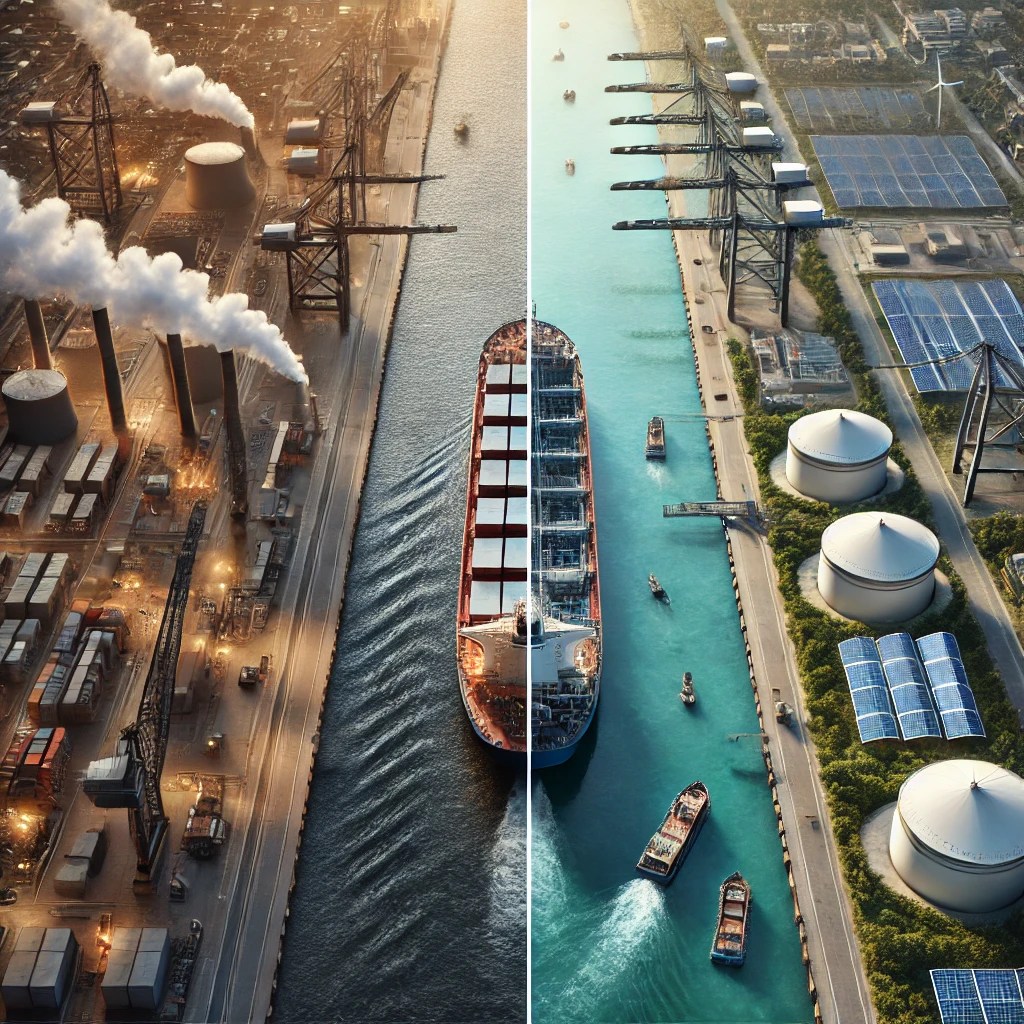
The shipping industry, often operating out of sight unless the cause of a major environmental catastrophe, but essential to the global economy, is facing a moment of enormous significance as it grapples with regulations imposed to reduce the industry’s carbon emissions. The decisions it makes today will not only shape the future of global trade but determine the fate of our planet. As the climate crisis deepens, the industry is presented with a clear choice: continue with hazardous fuels that merely shift the problem, or take bold steps toward genuinely sustainable practices.
For years, enormous cargo ships have sailed the world’s oceans, burning heavy fuel oil, a substance so toxic it’s astonishing we’ve allowed it for this long. This sludge-like fuel is a significant contributor to greenhouse gas emissions, air pollution, and marine degradation. The need to reach net-zero emissions is undeniable. Yet, the solutions being proposed today threaten to repeat the mistakes of the past.
One of the most widely promoted options is retrofitting ships to run on alternative fuels such as green ammonia or methanol. On the surface, this seems like a practical step. It promises to cut carbon emissions while maintaining the efficiency of global trade. But on closer inspection, serious concerns arise. Green ammonia, although carbon-free at the point of combustion, is highly toxic. The potential risks to human health and marine life, particularly in the event of an accident, are too significant to ignore. What’s more, the infrastructure required to produce, transport, and store ammonia at the necessary scale doesn’t exist, and the cost of constructing it, with no guaranteed return, is immense.
This debate about fuels is reminiscent of the VHS vs Betamax battle that played out in the 1980s. Despite Betamax offering superior quality, VHS prevailed because it was cheaper and more widely adopted. Today, we’re seeing a similar contest between ammonia, methanol, and other transitional fuels. Like VHS and Betamax, these fuels may eventually become outdated as cleaner, more advanced options emerge.
Enter hydrogen, which could be considered the “DVD” in this analogy. Hydrogen is cleaner and more promising than ammonia or methanol, yet it is still a transitional technology. Though it represents a significant leap forward, hydrogen’s infrastructure and production challenges still pose significant hurdles. It may play a role in decarbonizing the industry, but just as DVDs were eventually replaced, hydrogen may not be the ultimate answer.
So, what is the end goal? Just as streaming services have made physical formats like DVDs obsolete, the shipping industry’s future lies in a fully electrified, fuel-free model. Advances in battery technology and renewable energy could eliminate the need for hazardous fuels altogether. Smaller, electric-powered vessels handling regional trade would significantly cut emissions. As countries produce surplus clean electricity from wind and solar power, electrification of shipping becomes not just possible but necessary. A fuel-free, electric future is the streaming service of the shipping industry; sustainable, efficient, and devoid of the toxic risks associated with ammonia or hydrogen.
This is not just a matter of technology; it’s a reimagining of how global trade operates. The pandemic exposed the fragility of extended supply chains, and now there is a growing recognition that bringing manufacturing closer to consumption could enhance resilience and drastically reduce emissions. Localizing production aligns with the rising consumer demand for transparency and ethically produced goods, and it offers a way to reduce the need for vast fleets of long-haul cargo ships.
Critics may argue that such a transformation is too expensive or too radical. But the billions currently earmarked for building ammonia infrastructure could instead be directed toward clean electrification. This would deliver a host of benefits: cleaner air, reduced emissions, and more robust local economies. These aren’t small gains, they represent a fundamental shift that would reshape the shipping industry for the better.
Clinging to ammonia and other transitional fuels carries serious risks. Continuing to rely on these hazardous materials could lock us into decades of environmental risk without addressing the root of the problem: our dependency on fossil fuels and harmful energy sources. Much like the way VHS eventually became obsolete, ammonia and methanol may soon be seen as short-term solutions that were never meant to last. In contrast, embracing electrification would not only reduce emissions but enhance energy security and align with global efforts to mitigate climate breakdown.
Government policy has a crucial role to play in guiding the industry toward this safer, greener future. Too often, subsidies and incentives favor risky projects that cater to corporate interests rather than the public good. A shift in priorities is long overdue. Public funds should support projects that offer genuine sustainability, rather than those that merely shift the environmental burden from one place to another.
The shipping industry’s decisions are emblematic of the broader choices society at large is confronting. These decisions test our collective willingness to face uncomfortable truths and make the necessary changes. Will we continue down a path that offers short-term convenience but locks in long-term risk? Or will we have the foresight to embrace a future where economic and environmental sustainability go hand in hand?
Time is running out. The impacts of climate change are accelerating, and the window for meaningful action is closing fast. The decisions made today will shape the world we leave behind. The shipping industry, with its immense capacity for innovation and influence, has a unique opportunity to lead by example.
The future demands vision, courage, and a break from the harmful practices of the past. This is not just about cleaner ships or greener fuels. It’s about rethinking what progress means in a world facing ecological collapse. The path forward is clear, and the stakes could not be higher. It’s time for the shipping industry to set sail on a new course, one that ensures not only the safe transport of goods but the survival of humanity in a truly sustainable future.
 Charlie de Carbon
Leave a comment