
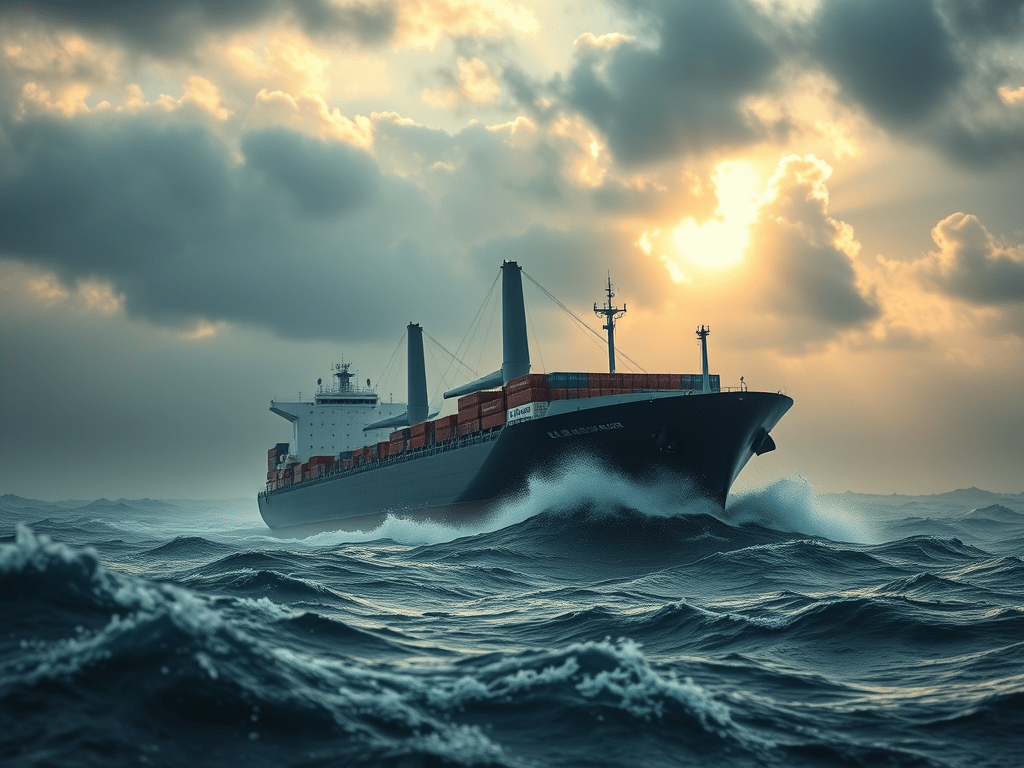
On the voyage toward decarbonisation, the maritime industry is charting a perilous course through uncharted waters. While innovation glimmers on the horizon, the path forward remains obscured by compromise and half-measures. Every announcement of a wing or rotor sail installation, or a green-fuelled prototype ship, rings with optimism. Yet the deeper truth is one of systemic inertia, a reluctance to confront the entrenched paradigms that anchor us to fossil fuels.
The industry has been quick to celebrate incremental achievements. Air lubrication systems promise friction reduction, optimized hull forms shave percentage points off fuel consumption, and wind-powered innovations like wing and rotor sails evoke nostalgia for the golden age of sail. Meanwhile, alternative fuels like ammonia and methanol tantalize with the promise of a zero-carbon future. Yet beneath this veneer of progress lies an unsettling reality: these technologies, while impressive, are piecemeal solutions. They skirt the edges of a problem that demands a revolution, not refinement.
Alternative fuels illustrate this dilemma starkly. Ammonia, though carbon-free at point of use, presents serious challenges with toxicity and the infrastructure overhaul required for widespread adoption. Methanol, less hazardous, relies on scaling carbon-neutral production methods that remain elusive. Hydrogen, emblematic of clean energy, is hindered by high costs and logistical complexity. These are not panaceas but complex, conditional propositions, tethered to a future that feels perpetually out of reach.
Efficiency measures like air bubble lubrication or wind-assisted propulsion, while laudable, suffer from narrow applicability. Their success depends on specific hull form or operational contexts, making them useful but insufficient. Worse, they risk becoming symbolic gestures, used to placate regulators or investors while sidestepping the fundamental need for systemic change.
Still, these efforts are not without merit. Vessels running on renewable fuels, despite their limitations, serve as vital experiments. They push boundaries, uncovering the operational realities of alternative technologies and testing the limits of current infrastructure. While not revolutionary, they pave the way for more ambitious undertakings.
However, progress is undermined by a regulatory framework that often values optics over outcomes. Carbon credits, for instance, offer an ostensibly convenient pathway to compliance. Yet, analysis shows that few of these credits represent genuine emission reductions. Many schemes rely on questionable assumptions or flawed methodologies, enabling operators to “buy compliance” in a high stakes game of regulatory arbitrage, while avoiding real operational changes. This model fosters complacency, allowing the industry to defer meaningful action.
Compounding this inertia are bullish forecasts from fossil fuel giants. Projections by most of the oil and gas industry, and OPEC, suggest that oil demand will remain steady, or even grow, through 2050, particularly in hard to abate sectors, like transport, where decarbonisation remains costly and complex. These assumptions, underpinned by expectations of weakened enforcement, cast a shadow over decarbonisation efforts.
Even efficiency gains, often hailed as victories, come with their own paradox. The Jevons Paradox warns that increased efficiency can lead to greater consumption. Lower transport costs incentivise longer supply chains and higher trade volumes, often erasing environmental benefits.
Amid these challenges, financial institutions are beginning to reshape the landscape, but report that they are finding it increasingly difficult to align green and ESG investment principles with the shipping industries financing needs. The Poseidon Principles, established in 2019, commit signatories, who account for 80% of global ship financing, to align their portfolios with the International Maritime Organization’s (IMO) net-zero goals. This alignment requires shipping companies to adopt sustainable practices to secure funding. Lenders assess carbon intensity, creating financial incentives for greener operations. Non-compliance risks restricted access to capital, making decarbonization not just an environmental imperative, but a financial one.
Breaking this cycle demands more than technological ingenuity, it requires courage. Absolute emissions targets, enforceable and unyielding, must replace pliable offset frameworks. Investments must shift from marginal gains to transformative solutions, underpinned by robust infrastructure and bold regulatory vision.
The maritime sector’s future hinges on its willingness to embrace systemic change. Incremental progress alone will not suffice. Yet, within these small steps lies a nugget of hope. Every wing or rotor sail, every green-fuelled voyage, and every efficiency upgrade contributes to the broader understanding of what must come next. Imperfect and incomplete, they remain essential.
To truly chart a sustainable course, the industry must abandon half-measures for a bold, uncompromising vision. Anything less is not progress but a mirage, shimmering on the horizon, forever out of reach.
 Charlie de Carbon
Leave a comment