
By Charlie de Carbon
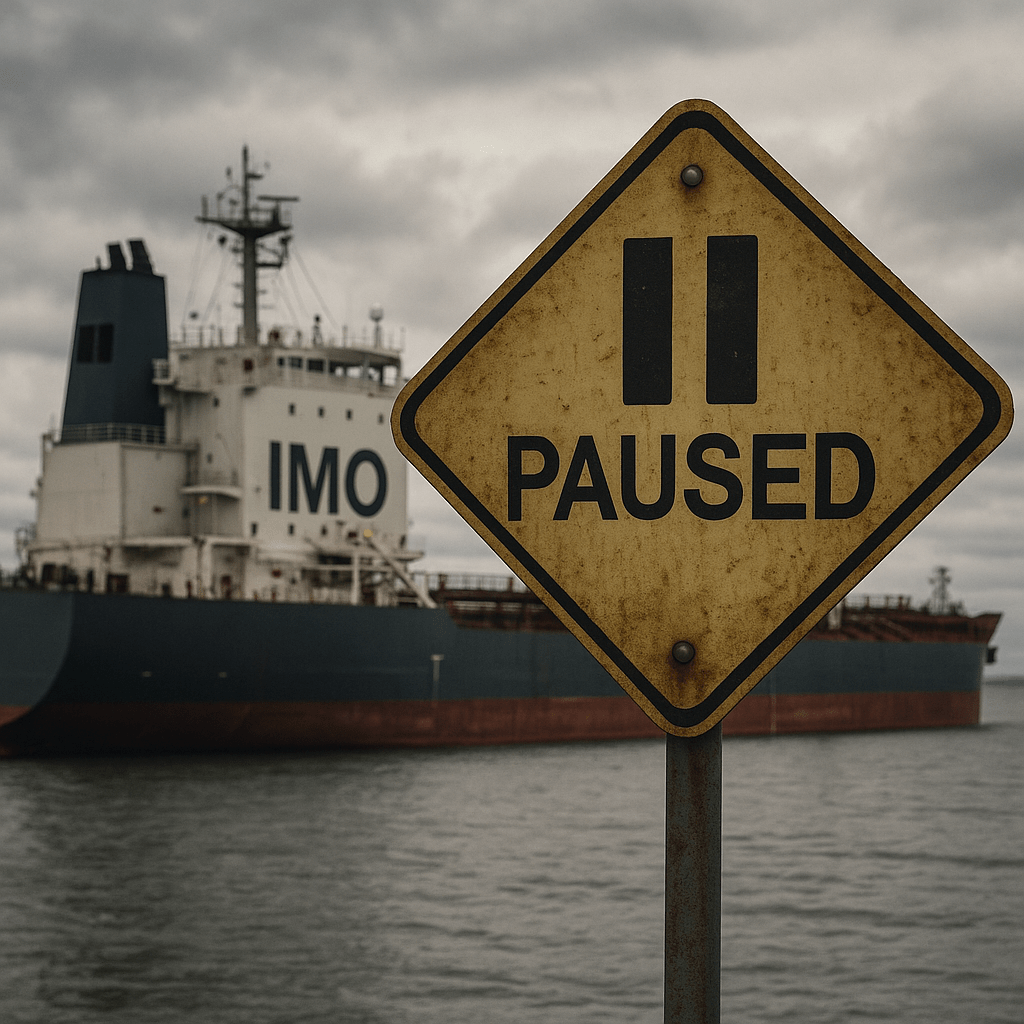
So, the IMO blinked.
The global carbon pricing plan for shipping is on hold, again. Cue the outrage, the finger pointing, the disappointment, the “we were so close” posts.
But let’s be honest: anyone who’s ever tried to align 170 sovereign nations on a single fuel strategy knew this was coming. The surprise isn’t the delay; it’s that we thought we were ready.
Because we’re not. Not yet.
Right now, there simply isn’t enough technology, infrastructure, or regulatory clarity to make a global carbon market work without collateral damage. You can’t punish an industry for lacking options. You can’t tax your way past physics. And you definitely can’t build a fair transition on technology that’s still in beta.
The truth is, shipping isn’t stalling; it’s evolving. Quietly.
Containerised fuel cells and battery hybrids are replacing diesel generators for hotel loads, providing propulsion power for short coastal and protected waters voyages and handling port manoeuvres.
Wind wings, air lubrication, and smarter hulls are trimming emissions.
Methanol and ammonia prototypes are becoming real fleet decisions.
That’s progress, not perfection, and it’s what this pause should protect.
So, take the heat out of the headlines. This isn’t the death of ambition; it’s a systems check. We’ve got a year to do what we engineers do best: measure, verify, iterate, and build the frameworks that make a future carbon market credible.
Because when the IMO eventually presses “go,” the world will need more than politics.
It’ll need proof.
And that proof starts here; in shipyards, control rooms, and data streams, not in conference halls.
 Charlie de Carbon
Leave a comment